From raw crash payloads to structured diagnosis and next steps.
Analyze crash payloads with Unreal-aware context and turn them into structured findings, clearer fault scope, and reviewable next steps. Read-only workflow, no silent fixes.
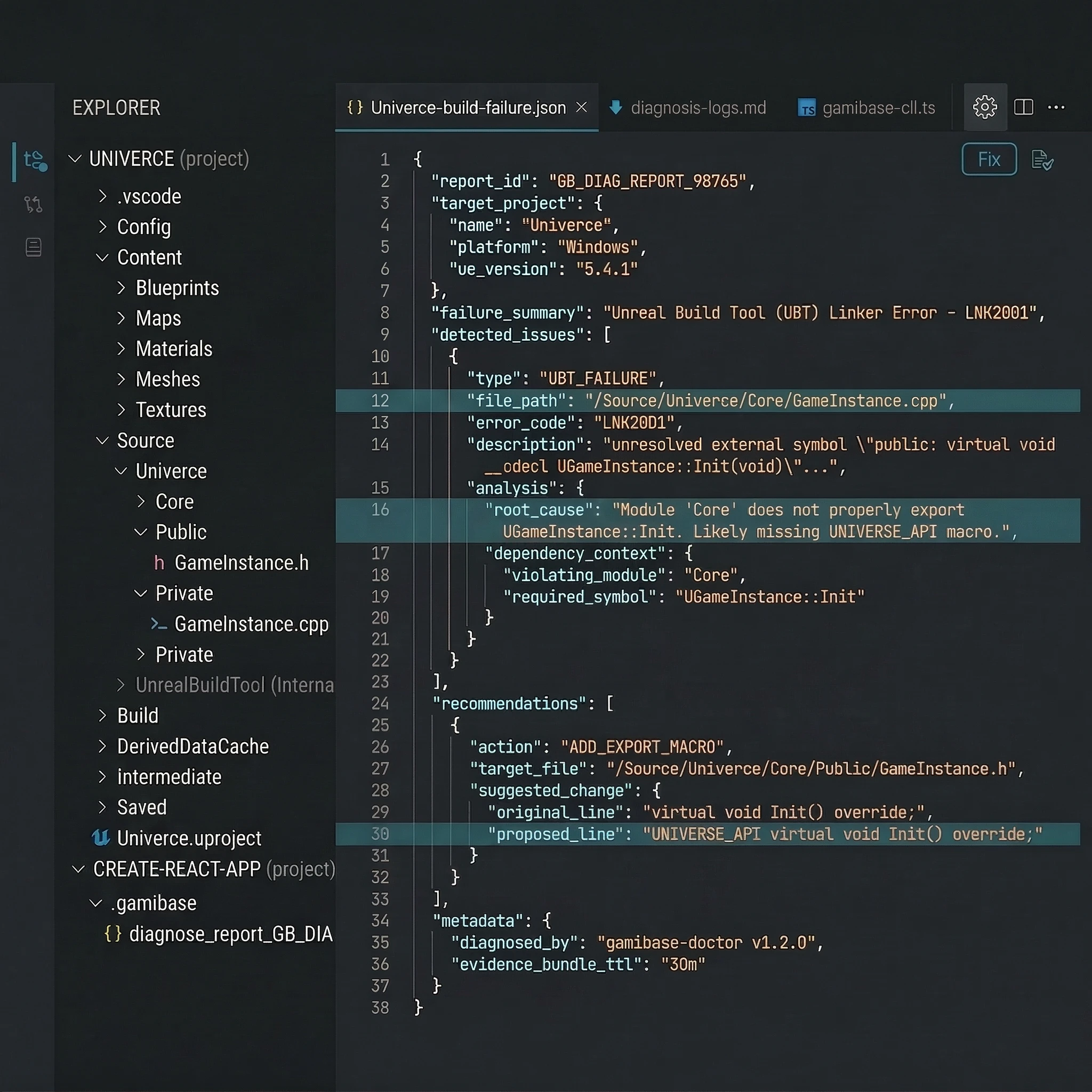
Crash analysis combines ingest, structured diagnosis, and read-only workflow into one Unreal-aware layer. Every finding is explicit and reviewable.
Crash diagnosis built for Unreal, not generic parsers.
Crash Ingest
Submit stack traces, minidumps, or log excerpts for structured, Unreal-aware analysis. Multiple payload formats supported.
Learn moreRead-only Workflow
Findings only. No automatic fixes, no mutation. The operator reviews and decides escalation, fix, or defer.
Feature detailsFindings stay explicit and reviewable
Crash analysis is read-only. Findings stay explicit, scoped, and local-first. No silent fixes.
Read-only by default
Crash analysis is read-only. No mutation, no side effects. Findings stay explicit and reviewable before any action.
Read the docsScoped findings
Findings stay tied to the crash payload and project context instead of quietly turning into downstream action.
Read the docsOperator review required
Suggested next steps are never applied silently. The operator sees findings, reviews context, and explicitly decides before any change.
Read the docsLocal-first and CI-aware
Crash analysis runs locally. Same quality in terminal, editor, CI, and agent runtimes — no cloud dependency for analysis.
Read the docsFrom crash payloads to action in minutes.
Root cause in minutes
From raw crash payloads to structured findings with fault location and likely root cause. No more hours parsing stack traces.
Unreal-aware context
Engine frames, plugin boundaries, and Blueprint call chains are understood. Diagnosis built for Unreal, not generic crash parsers.
Reviewable findings
Every finding stays explicit and reviewable. Operator decides escalation, fix, or defer — no silent application.
How Crash Analysis helps
Ingest
Gamibase gives operators a more usable starting point by shaping crash input into something the rest of the workflow can actually build on.